
Edge AI: Why Processing Intelligence Needs to Move Closer to the Machine

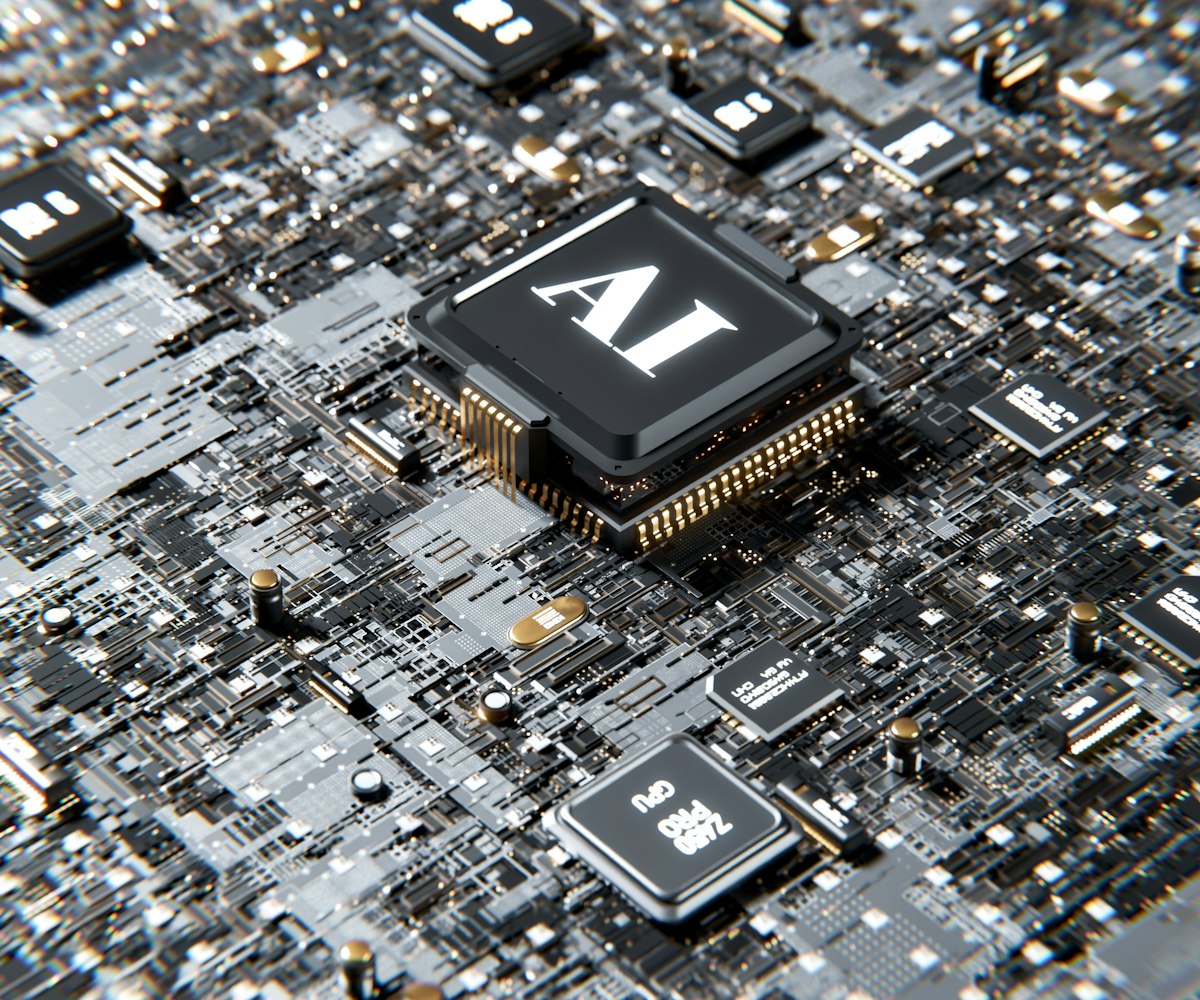
Something fundamental is shifting in how artificial intelligence is deployed. For years, the dominant model was simple: collect data, send it to the cloud, process it centrally, and return results. But that model has a growing problem — latency, bandwidth costs, privacy exposure, and outright failure when connectivity drops. In 2026, the global edge AI market is valued at approximately $30 billion and is on a trajectory to reach $385 billion by 2034. The reason is straightforward: intelligence needs to live where the action is, not hundreds of milliseconds away in a data centre.
What Is Edge AI, Exactly?
Edge AI refers to the deployment of artificial intelligence algorithms directly on devices at the “edge” of a network — the point where data is generated — rather than sending that data to centralised cloud servers for processing. This could be a factory floor sensor, a camera on a highway, a medical wearable, or the onboard computer of an autonomous vehicle.
The distinction matters enormously. Cloud-based AI requires a round trip: data travels from the device to the cloud, gets processed, and a response travels back. Even under ideal conditions, this takes tens to hundreds of milliseconds. For most applications, that is fine. But for an autonomous vehicle deciding whether to brake for a pedestrian, for a surgical robot responding to tissue resistance, or for an industrial press detecting a dangerous anomaly — every millisecond is critical.
Every safety-critical decision in an autonomous vehicle — object detection, pedestrian identification, emergency braking — must execute in under 10 milliseconds. Cloud dependency is simply not an option.
N-ix Edge AI Use Cases Report, 2026
The Numbers Behind the Shift
The scale of edge AI adoption in 2026 is striking. According to market research, edge AI chipset shipments — the specialised processors designed to run AI workloads locally — are forecast to grow at a compound annual growth rate of 31%, with the chipset market alone expected to expand from $34.4 billion in 2026 to $96 billion by 2031. GPU architectures for edge deployments are growing even faster and are expected to overtake CPU-based deployments by 2030.
Beyond the hardware, the operational economics are compelling. One of the most cited statistics from 2026 deployments is that filtering and processing data at the source produces an average 80% reduction in data backhaul costs. When you consider that some industrial IoT deployments generate terabytes of sensor data per day, the savings from not transmitting all of that to a cloud are enormous.
Where Edge AI Is Making the Biggest Impact
Autonomous Vehicles
This is perhaps the most high-stakes application of edge AI. Modern autonomous and semi-autonomous vehicles are equipped with arrays of LiDAR sensors, radar units, and high-resolution cameras, all generating data continuously. The onboard edge computers must process all of this in real time, identifying road markings, other vehicles, cyclists, pedestrians, and obstacles — and making split-second decisions without any reliance on a network connection. The edge is not optional here; it is existential to the safety case.
Smart Manufacturing and Industry 4.0
Factories are among the most data-rich environments on the planet. Edge AI in manufacturing enables predictive maintenance — detecting the early signatures of equipment failure before a breakdown occurs — as well as automated quality inspection using computer vision, real-time process optimisation, and supply chain co-ordination. Industrial edge computers and IIoT gateways process machine data locally, reducing the latency that would make cloud-based control loops impractical for high-speed production lines.
Smart Cities
Urban AI deployments present a bandwidth challenge that edge computing was born to solve. A smart city may have thousands of cameras, environmental sensors, traffic monitors, and utility meters all generating data simultaneously. Sending all of that to a central cloud is prohibitively expensive and creates dangerous single points of failure. Edge AI allows traffic management systems to analyse video feeds and adjust signal timing locally, environmental sensors to trigger alerts without round-tripping to a data centre, and waste management systems to signal collection needs dynamically. Barcelona’s IoT-based traffic management system, for example, reduced average travel time by 21% — a result enabled by on-site processing, not distant computation.
Healthcare and Wearables
The intersection of edge AI and personal health monitoring is one of the most consequential developments of the decade. Wearable devices can now run on-device AI models that monitor cardiac rhythms, blood oxygen, glucose levels, and movement patterns — detecting anomalies and alerting users or medical teams without any of that sensitive personal health data needing to leave the device. This is both a privacy benefit and a reliability benefit: the device works in a hospital with no Wi-Fi and in a remote location with no cell signal.
The Technical Enablers: Why Now?
Edge AI at scale became practical in 2026 for several converging reasons:
- Purpose-built edge chips: Neural Processing Units (NPUs) and specialised AI accelerators from companies like NVIDIA, Qualcomm, Intel, and a wave of challengers are now available in low-power, high-performance packages suitable for embedded deployment.
- Model compression techniques: Quantisation, pruning, and knowledge distillation allow large AI models to be compressed into versions that run efficiently on constrained hardware without catastrophic accuracy loss.
- 5G connectivity: While edge AI reduces dependence on connectivity, 5G provides ultra-low-latency backhaul for hybrid architectures that process locally but sync selectively.
- Federated learning: This technique allows edge devices to improve shared models without sharing raw data — the models learn locally and share only parameter updates, preserving privacy while benefiting from collective intelligence.
Challenges That Still Need Solving
Edge AI is not without its friction points. Several challenges remain active areas of work in 2026:
- Security at the edge: Distributed deployments dramatically expand the attack surface. Each edge device is a potential entry point, and many are deployed in physically unsecured locations.
- Model management and updates: Pushing model updates to thousands or millions of edge devices — while ensuring consistency, version control, and rollback capability — is an operational complexity that cloud-centric architectures do not face.
- Heterogeneous hardware: Edge AI deployments span a vast range of devices with different processors, memory constraints, and operating systems, making it difficult to develop and maintain models that run consistently across all of them.
- Power consumption: Battery-powered edge devices require AI models that are extremely efficient. Even small increases in computational load can meaningfully reduce device lifetime.
The Strategic Imperative for Enterprises
For enterprise technology leaders, edge AI is no longer a speculative R&D topic. It is a live infrastructure question. The decisions being made in 2026 about edge architecture — which hardware platforms to standardise on, which model formats to support, how to handle edge-cloud orchestration — will shape competitive position for the decade ahead.
The organisations that are moving fastest are those that have reframed edge AI not as a technology project but as an operational model. They are asking: what decisions in our business currently depend on data that is available locally but processed remotely? Where does latency, bandwidth cost, or connectivity risk create operational drag? Those are the seams where edge AI delivers its highest value.
Key Takeaways
- The global edge AI market is valued at approximately $30 billion in 2026, on course to reach $385 billion by 2034.
- Edge AI chipsets are growing at a 31% CAGR, with GPUs set to overtake CPUs by 2030.
- Processing data at source reduces data backhaul costs by an average of 80%.
- Autonomous vehicles, smart manufacturing, smart cities, and healthcare wearables are the highest-impact current applications.
- Purpose-built chips, model compression, 5G, and federated learning are the primary technical enablers.
- Security, model management, hardware heterogeneity, and power efficiency remain active challenges.
- Enterprise edge AI strategy is an infrastructure decision, not a research question — the time to act is now.
Comments 00