
Process Mining: The X-Ray Vision Your Business Operations Need

Most organisations know they have process problems. They sense the inefficiencies, the workarounds, the handoffs that take twice as long as they should. What they lack is visibility — a clear, evidence-based picture of how their processes actually run, versus how they are supposed to run. Process mining is the technology that provides exactly that visibility, and in 2026 it is growing at a 21.77% compound annual growth rate, expanding from $3.82 billion in 2025 to an estimated $4.64 billion this year, with projections pointing toward $15.2 billion by 2032. The reason for that growth is simple: it works.
What Process Mining Actually Does
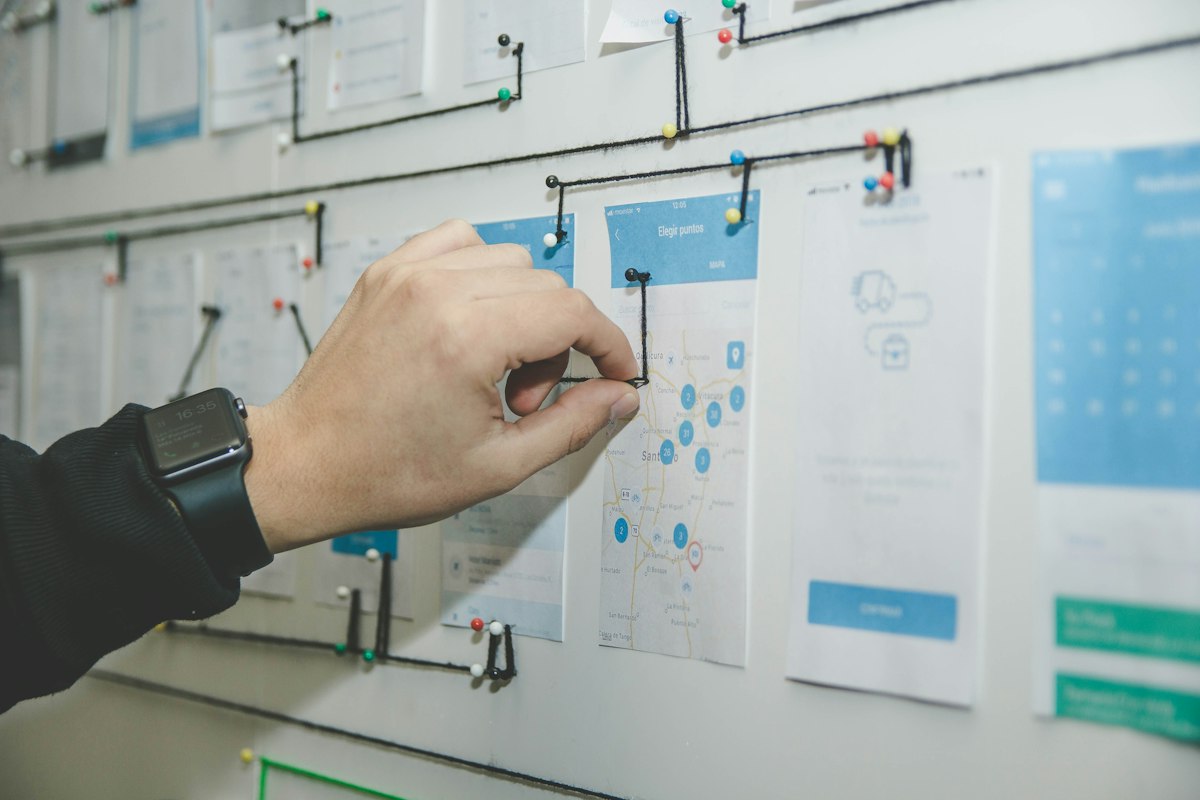
Process mining is an analytical technique that extracts event logs from enterprise systems — ERP platforms like SAP, CRM systems, ticketing tools, financial systems — and uses that data to reconstruct exactly how business processes are executing in reality. Every time a user performs an action in a business system, it generates a timestamp and an event record. Process mining aggregates those records and uses specialised algorithms to build a visual process map: a real-time, data-driven picture of how your order-to-cash process actually flows, how your purchase-to-pay cycle really behaves, where cases get stuck, which variants exist in your process, and where the bottlenecks and compliance gaps are hiding.
The contrast with traditional process analysis is stark. Conventional process documentation relies on workshops, interviews, and observation — all of which capture how people think processes work or how they perform when they know they are being watched. Process mining captures what the data says, which is invariably more complex, more varied, and more revealing.
GE Healthcare increased free cash flow by $1.3 billion in a single year by leveraging Celonis’ process mining solution — using the technology to identify value opportunities in day-to-day operations and unlock working capital.
Celonis Case Study, 2026
The Market Landscape in 2026
Celonis remains the dominant player in the process mining market, but the competitive landscape has intensified significantly. SAP Signavio has gained substantial ground within SAP-heavy enterprise environments, where its tight integration with SAP’s core systems provides a compelling advantage. UiPath, which entered the space through its automation platform, is making process intelligence a core component of its offering. IBM, Microsoft (via Power Automate Process Mining), and a growing cohort of specialist vendors are all competing for share.
The market’s geographic profile mirrors other enterprise analytics markets: North America leads in adoption, supported by rapid uptake of advanced analytics and mature enterprise digitisation programs. However, European adoption is growing quickly, partly driven by compliance and regulatory requirements that make process transparency a business necessity rather than an option.
Where Process Mining Delivers Its Highest Value
Purchase-to-Pay and Order-to-Cash
These two process families are the highest-impact targets in most enterprise process mining deployments. Purchase-to-Pay (P2P) covers everything from purchase requisition to supplier payment. Order-to-Cash (O2C) spans from customer order receipt to payment collection. Both processes are document-intensive, span multiple departments and systems, involve large volumes of transactions, and have significant financial consequences when they deviate from the optimal path.
Process mining in accounts receivable has been shown to accelerate on-time payments, reduce past-due debt, and enable automated detection of duplicate invoices — preventing duplicate payments that in large enterprises can represent tens of millions of dollars annually. In 2026, Purchase-to-Pay and Order-to-Cash are identified by practitioners as generating the biggest measurable business impact of any process mining use case.
Healthcare Operations
GE Healthcare’s $1.3 billion free cash flow improvement from a single Celonis deployment is perhaps the most dramatic documented result in the process mining industry. Healthcare organisations are using process mining across patient journey analysis, clinical workflow optimisation, billing and claims processes, supply chain management, and regulatory compliance. The combination of high transaction volumes, complex multi-system workflows, and enormous financial stakes makes healthcare an ideal environment for process mining’s capabilities.
Financial Services Compliance
Over 72% of enterprises in 2026 are using process mining tools specifically for compliance validation. In financial services, this translates to automated monitoring of regulatory processes, real-time detection of procedure deviations, and audit-ready documentation of how controls are operating in practice. The ability to demonstrate to regulators that specific controls are working — not just designed to work — is a significant governance advantage.
Manufacturing and Operations
Manufacturing process mining targets production planning, quality management, maintenance workflows, and supply chain coordination. Assembly line supervisors can use process mining to understand which production variants are associated with quality issues, where cycle times deviate from standard, and how maintenance events affect production throughput. The result is a more granular, evidence-based approach to operational improvement than traditional lean or Six Sigma methodologies can achieve alone.
The Key Trends Shaping Process Mining in 2026
- Object-Centric Process Mining (OCPM): Traditional process mining analyses cases from a single perspective — one order, one invoice, one claim. OCPM allows analysis of multiple interrelated objects simultaneously, enabling a far more realistic model of complex processes where orders, deliveries, invoices, and customers interact in non-linear ways. OCPM is the most significant technical advance in the field in recent years.
- Real-Time Monitoring: The shift from periodic process audits to continuous, real-time monitoring is well underway. AI-enabled process discovery adoption grew 52% globally in the past year, while real-time monitoring feature usage increased 47%. Organisations are moving from using process mining as a diagnostic tool to using it as an ongoing operational control system.
- Cloud-Based Deployment: The majority of new process mining implementations in 2026 are cloud-native, offering enhanced flexibility, lower infrastructure costs, and easier integration with other SaaS platforms.
- AI-Augmented Root Cause Analysis: Machine learning layers are now being added on top of process mining foundations to automatically identify not just where a process is deviating but why — attributing root causes and suggesting corrective actions.
- Integration with Hyperautomation: Process mining is increasingly the discovery and monitoring engine that feeds hyperautomation programs — identifying the best automation targets, validating that bots are performing correctly, and detecting when automated processes need to be reconfigured.
What Process Mining Reveals That Surprises Organisations
One of the consistent findings from process mining deployments is that the “happy path” — the standard, documented procedure for a process — accounts for a far smaller proportion of actual executions than organisations expect. In a typical enterprise process mining project, organisations discover dozens or even hundreds of process variants that have evolved organically over time, as individuals and teams developed workarounds for system limitations, policy gaps, or efficiency needs.
Some of these variants are harmless or even represent legitimate optimisations. Others represent compliance risks, inefficiency drains, or technical debt that has accumulated invisibly. Without process mining, organisations have no systematic way to discover these variants exist. Companies that implement process mining solutions can achieve up to a 30% reduction in operational costs — not because the tool reduces costs directly, but because it makes the waste visible so that it can be addressed.
Getting Started: What a Process Mining Implementation Looks Like
A well-planned process mining pilot can go from kickoff to live insights in twelve to sixteen weeks for a single process. The implementation sequence is typically: data extraction and connection (pulling event logs from the relevant source systems), process discovery (generating the initial process map), conformance checking (comparing actual behaviour against the designed process), and enhancement (adding performance data and identifying improvement opportunities).
Licensing costs for cloud-based solutions such as Celonis or SAP Signavio sit in the mid-five-figure range per year for initial implementations, scaling with data volume and user count. The ROI calculation is usually straightforward: identify a single process where reduced cycle time, fewer exceptions, or better compliance adherence translates into a measurable financial outcome, and the payback period is typically months rather than years.
Key Takeaways
- The process mining market grows from $3.82B in 2025 to $4.64B in 2026, at a 21.77% CAGR heading toward $15.2B by 2032.
- GE Healthcare achieved a $1.3 billion increase in free cash flow through a single Celonis deployment.
- Companies implementing process mining achieve up to 30% reduction in operational costs.
- 72% of enterprises use process mining for compliance validation; 58% for cost optimisation.
- AI-enabled process discovery adoption grew 52%; real-time monitoring usage up 47%.
- Object-Centric Process Mining (OCPM) is the most significant technical advance in the field.
- Purchase-to-Pay, Order-to-Cash, healthcare operations, and financial services compliance deliver the highest ROI.
- A single-process pilot can reach live insights in 12–16 weeks.
Every organisation has processes it believes it understands — and processes that are quietly operating in ways nobody at the senior level would sanction if they knew. Process mining is the X-ray that makes the invisible visible. In a business environment where efficiency, compliance, and speed of adaptation are all simultaneously under pressure, the ability to see your operations clearly — not as they were designed, but as they are actually running — is one of the most valuable capabilities an organisation can develop. The data is already there in your systems. Process mining is how you read it.
Comments 00