
Workplace AI Ethics: What Employees Fear About Surveillance, Monitoring, and Algorithmic Management


As AI weaves itself into the fabric of every workplace tool, a quieter transformation is unfolding alongside the productivity gains and efficiency wins: employers are acquiring unprecedented visibility into how their employees work, think, communicate, and perform. AI-powered monitoring tools can log every keystroke, analyse email sentiment, score call quality in real time, track eye movements to detect attention lapses, and flag “disengagement” signals from meeting participation patterns. According to recent cross-national research, algorithmic management has now reached 90% adoption in the United States and 79% across European countries — making it one of the most rapid and underacknowledged workplace transformations of the decade. And employees are noticing: 29% report feeling uncomfortable with monitoring practices, 23% say their job satisfaction has been negatively affected, and 81% believe the government should introduce laws protecting employees from AI-driven decisions about their employment.
What Algorithmic Management Actually Looks Like
Algorithmic management is the use of software systems — increasingly AI-powered — to direct, monitor, evaluate, and make decisions about employees. It’s been most visible in logistics and gig work (Amazon warehouse workers with productivity quotas enforced by software, Uber drivers rated by algorithms) but has rapidly expanded into knowledge work. In 2026, algorithmic management of white-collar employees can include:
- Productivity scoring — AI tools that score employees on output, response times, and activity levels, often without revealing exactly how the score is calculated
- Email and communication analysis — Natural language processing that analyses tone, sentiment, and content in internal communications to flag potential issues or assess “cultural fit”
- Meeting participation monitoring — AI tools that track speaking time, camera-on rates, and engagement signals in video calls
- Attention tracking — Some platforms now use webcam-based AI to detect whether employees are looking at their screens
- Performance prediction — AI models trained on historical data that score employees on promotion potential, flight risk, or cultural alignment
- Automated disciplinary triggers — Systems that automatically escalate issues or flag employees based on algorithm-detected patterns without human review
What makes this different from traditional HR monitoring is not just the scale — it’s the opacity. An employee whose performance is evaluated by a manager can, in principle, understand the criteria and challenge the assessment. An employee scored by an AI model that processes hundreds of variables in ways that cannot be explained often cannot.
What Employees Actually Fear
Surveys and research consistently show that employee fears around AI workplace monitoring cluster around several themes — and the most intense anxiety is not about the monitoring itself but about its consequences.
“The standout anxiety isn’t necessarily losing a job — it’s losing it without warning. The fear of being quietly swapped out by an algorithm outranks even the fear of unfair screening.”
Careerminds AI Protection Report, 2026
The specific fears employees report in 2026 include:
- Invisible termination risk (32%) — Fear of being flagged, scored low, or made redundant by an algorithm with no human review, no warning, and no opportunity to respond
- Loss of privacy at home — For remote workers, AI monitoring tools blur the boundary between professional and personal space in ways that feel deeply invasive
- Algorithmic bias — Concern that AI trained on historical data will encode and amplify existing biases around race, gender, disability, or communication style
- Chilling effects on behaviour — Research confirms that employees under surveillance adapt by looking busy rather than working effectively, suppressing dissent, avoiding creative risks, and performing compliance rather than exercising judgment
- Data misuse — Uncertainty about what data is collected, how long it is retained, who has access, and what it might be used for in future — including in contexts employees didn’t consent to
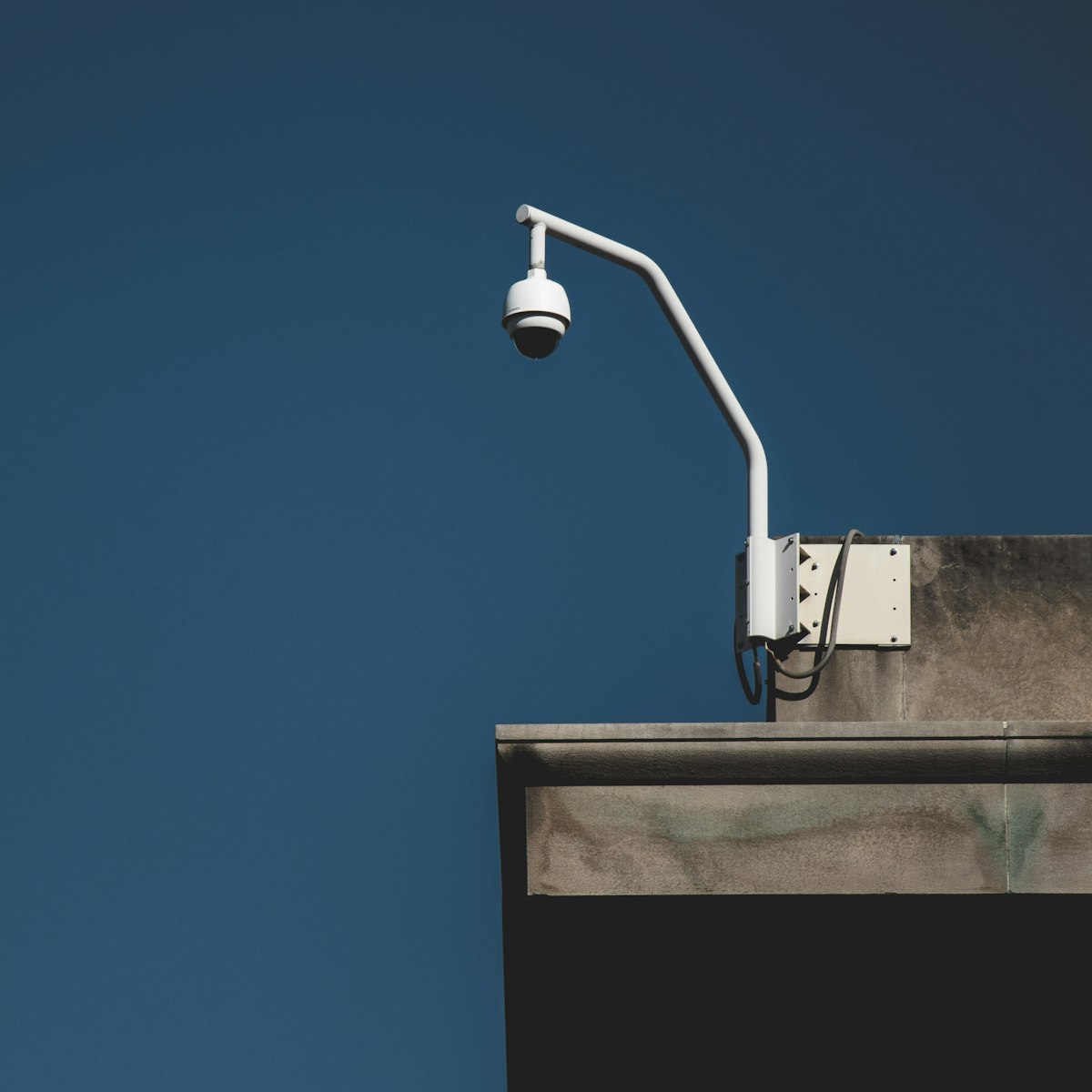
The Surveillance Paradox: Monitoring That Backfires
There is a profound irony at the heart of AI workplace surveillance: the most common justification for implementing it is productivity, yet the evidence increasingly suggests that intensive monitoring reduces the quality and creativity of work rather than improving it.
Research documented in the AI Now Institute’s landmark report on algorithmic management found consistent evidence that when workers know they are being watched, they adapt — but not in the ways employers hope. They focus on metrics that are measured rather than outcomes that matter. Deep work, which is difficult to observe but enormously valuable, gets deprioritised in favour of visible activity. Dissenting opinions — which are essential for healthy decision-making — get suppressed because raising a difficult question might be interpreted as a negative “sentiment signal.”
The talent implications are severe. Research published in 2026 on AI-managed workers found something surprising: workers under algorithmic management tolerate lower pay without demotivation — but this comes at the cost of reduced intrinsic motivation, creativity, and loyalty. The highest performers, who have the most external options and the strongest sense of professional identity, are most likely to leave surveillance-heavy environments. Bossware, as AI employee monitoring has been termed, functions as a talent filter — but in reverse.
The Regulatory Landscape Is Shifting Fast
The legal environment around AI workplace surveillance has changed dramatically by 2026. Employers who haven’t updated their practices — and their employee disclosures — face real legal exposure.
Key developments include:
- Illinois HB 3773 (effective January 1, 2026) requires employers to disclose when AI is used in hiring or employment decisions — the first state law of its kind in the US and a likely model for others
- California CCPA/CPRA updates now explicitly cover employee data in addition to consumer data, giving workers meaningful rights to know what data is collected and request its deletion
- EU AI Act provisions on high-risk AI systems explicitly include AI used in employment contexts, requiring risk assessments, transparency obligations, and human oversight
- Biometric privacy regulations are expanding in multiple US states, covering technologies like attention-tracking via webcam and voice analysis
- NLRB guidance has flagged that some forms of AI monitoring may interfere with protected concerted activity under the National Labor Relations Act
The patchwork of regulations is creating genuine compliance complexity for multinational employers, who must navigate different rules in different jurisdictions — sometimes with directly conflicting requirements.

What Ethical AI Management Actually Requires
The organisations navigating this well in 2026 are not the ones that have avoided AI — they’re the ones that have been deliberate about how they deploy it and transparent about what they’re doing. Ethical AI management in the workplace involves several concrete commitments:
Transparency About Data Collection
Employees should know exactly what data is being collected about them, why it is collected, how it is used, how long it is retained, and who has access. This is not just a regulatory requirement in many jurisdictions — it is a baseline condition of trust. Hidden surveillance is not just legally risky; it is culturally corrosive.
Human Oversight of Consequential Decisions
AI can and should inform decisions about performance, promotion, compensation, and employment — but it should not make them autonomously. Every consequential employment decision should have a human decision-maker who understands the AI’s input, can explain the decision in human terms, and is accountable for the outcome. “The algorithm said so” is not an acceptable basis for termination, demotion, or denial of promotion.
Algorithmic Auditing
AI systems used in employment contexts should be regularly audited for bias — examining whether they produce systematically different outcomes for employees of different demographic groups in ways that can’t be justified by legitimate job-related factors. This requires access to outcome data, diverse auditing teams, and organisational willingness to act on findings even when it’s uncomfortable.
Employee Voice and Redress
Employees should have meaningful channels to understand how AI systems affect their work, challenge decisions they believe are incorrect, and escalate concerns without fear of retaliation. The opacity of algorithmic management is not technically inevitable — it is a design choice, and a different design is possible.
Key Takeaways
- Algorithmic management has reached 90% adoption in the US, covering performance scoring, communication analysis, attention tracking, and automated decision support
- 29% of employees feel uncomfortable with monitoring; 81% want legal protections against AI-driven employment decisions
- The biggest employee fear is not just job loss — it’s losing a job without explanation, warning, or right of appeal
- Intensive surveillance consistently reduces deep work, suppresses dissent, and drives out high performers — the opposite of what employers intend
- The regulatory landscape is shifting rapidly: Illinois HB 3773, California CPRA, and the EU AI Act are creating new obligations that employers must meet
- Ethical AI management requires transparency about data, human oversight of decisions, algorithmic bias auditing, and meaningful employee redress mechanisms
The question for organisations in 2026 is not whether to use AI in managing their workforce — it’s how. Used thoughtfully, AI can help identify development opportunities, surface insights that human managers would miss, and make performance processes more consistent and fair. Used carelessly, it can hollow out trust, drive out talent, create legal liability, and produce a workforce of performers rather than contributors. The technology is neutral. The ethics are not. And the employees watching the cameras, the monitoring dashboards, and the performance scoring systems are paying close attention to which path their employer chooses.
Comments 00