
Vibe Coding and the SaaS Reckoning: How AI-Generated Software Is Rewriting the Rules of the Software Industry


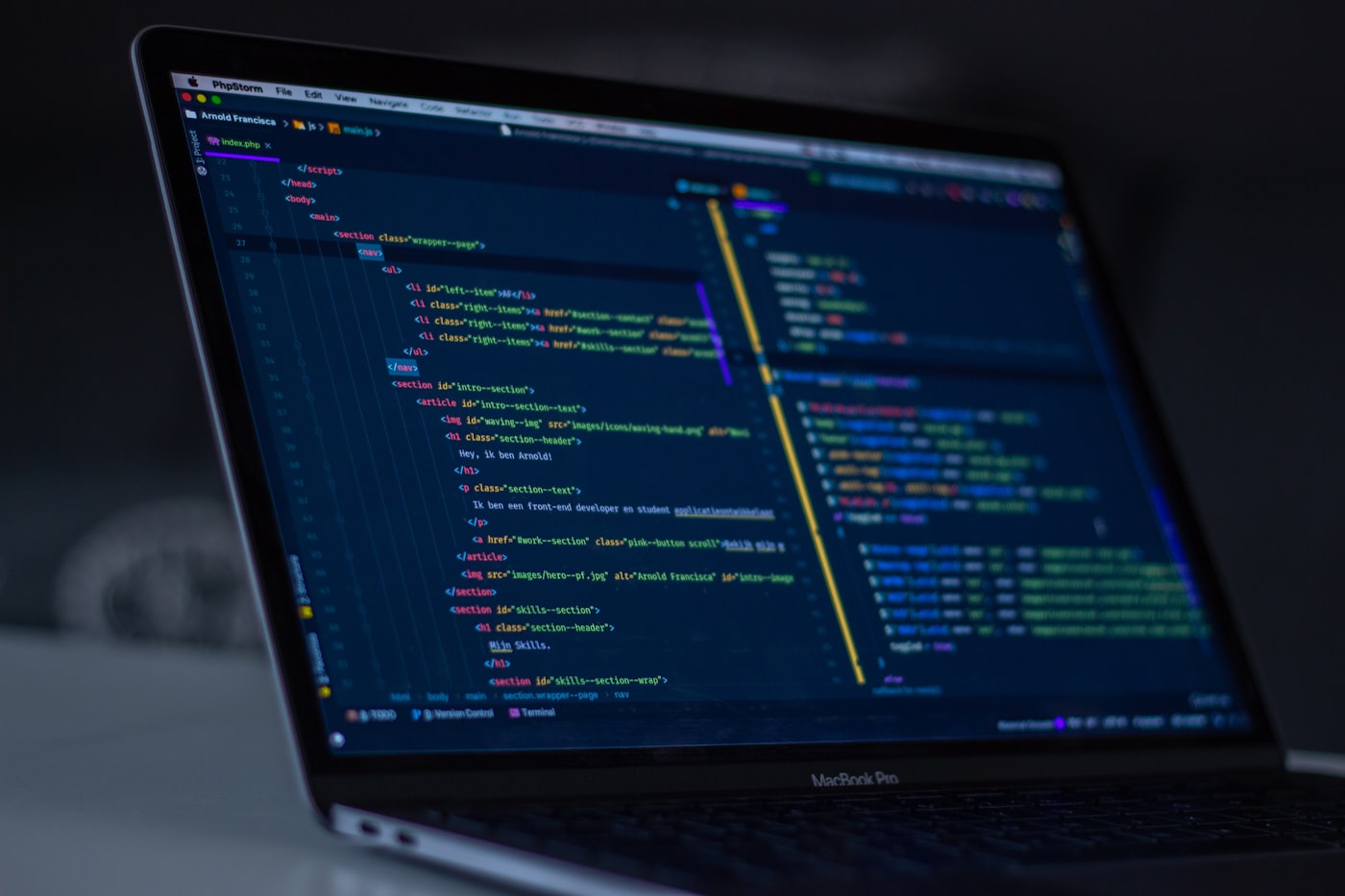
In February 2025, former OpenAI co-founder and Tesla AI chief dropped a short post that quietly detonated a charge under the global software industry. He described a new way of working with AI coding tools — one where you “fully give in to the vibes,” stop worrying about how the code works, and simply describe what you want in natural language until a working application emerges.
He called it vibe coding.
Within months, Merriam-Webster listed it as a trending expression. Collins English Dictionary named it Word of the Year for 2025. By mid-2026, surveys show that 92% of US-based developers had adopted AI-assisted coding in their workflows, and 60% of all new code being written globally is AI-generated. The cost of building a functional SaaS product collapsed from roughly $200,000 to approximately $5,000.
And in January 2026, when Anthropic released Claude Code and investors began connecting the dots, roughly $300 billion in SaaS market value evaporated in a single trading session.
This is not a developer trend. This is a structural shift in how software gets built, bought, and sold — and it has profound implications for every business that either makes software or depends on it.
What Exactly Is Vibe Coding?
At its simplest, vibe coding means describing software in plain English and letting an AI model write the code. Instead of writing SELECT * FROM orders WHERE status = 'pending', you say: “Show me all pending orders from the last 7 days, sorted by customer value.” The AI generates the SQL, the API call, the frontend component, the test, and sometimes the deployment script.

The tools enabling this shift include:
- Cursor — An AI-native code editor that understands entire codebases and can refactor, debug, and extend them from natural language instructions.
- Claude Code (Anthropic) — A terminal-native agentic coding tool that can autonomously browse files, run commands, and ship working code across a codebase.
- GitHub Copilot — Microsoft’s in-editor AI pair programmer, now with autonomous agent capabilities in Copilot Workspace.
- Lovable, Bolt, Replit Agent — Consumer-facing tools that generate entire web applications from a single prompt, deployed to the cloud in minutes.
Critically, 63% of vibe coding users in 2026 identify as non-developers — product managers, marketing directors, startup founders, and operations heads who are building internal tools, automations, and dashboards without writing a single line of code themselves.
“The hottest new programming language is English.”
— Andrej Karpathy, 2023 (now more true than ever)
From Vibe Coding to Agentic Engineering
By mid-2026, Karpathy himself acknowledged that vibe coding — in its pure, uncritical form — had already become passé. The next evolution is what he now calls agentic engineering: the disciplined practice of coordinating AI coding agents to ship professional software at scale, while preserving security, maintainability, and quality.
Where vibe coding says “give in to the vibes,” agentic engineering says “orchestrate the agents.” The developer’s role shifts from writing code to reviewing, steering, and governing AI-generated code. It is the difference between a junior developer and a tech lead — the human provides direction, sets constraints, and catches the errors the AI doesn’t know it’s making.
This distinction matters enormously for enterprise contexts, as we’ll explore below.
The SaaS Reckoning: The “SaaSpocalypse” Explained

The SaaS (Software-as-a-Service) model, which has dominated enterprise IT spending for twenty years, is built on a simple premise: one codebase, many customers, lower unit cost through scale. Salesforce charges you a monthly fee because it has amortised its development cost across thousands of paying customers.
Vibe coding attacks this model at its foundations.
If a product manager can build a functional CRM-equivalent in a weekend using Cursor and Claude Code for $50 in API costs, why pay $150/user/month for Salesforce? If a startup can spin up an expense management tool in a day that fits exactly how their finance team works, why adopt a rigid SaaS product and spend three months configuring it to approximate what they need?
The numbers tell the story:
- Cost to build a functional SaaS MVP: $200,000 in 2022 → $5,000 in 2026
- Time to build a working internal tool with AI: days, not months
- Share of developers using AI coding daily: 92%
- IBM reports a 60% reduction in development time for enterprise internal apps using AI-assisted coding
- AI coding market size in 2026: $8.5 billion and growing rapidly
The threat is not that vibe coding will replace Salesforce or SAP tomorrow. It won’t. The threat is more subtle and more structural: it is raising the question of why companies should pay for software they can now build — and that question, once asked at scale, reshapes an entire industry.
SaaS → PaaS: The Architectural Shift
If vibe coding collapses the cost of building software, what does the software industry sell instead?
The answer that is emerging is Platform-as-a-Service (PaaS) — not in the traditional DevOps sense (hosting environments), but in a new, AI-native sense: selling the infrastructure, models, APIs, and governance rails on top of which customers build their own AI-generated software.
Consider what this looks like in practice:
The Old Model (SaaS)
A vendor builds a fixed application. You pay a subscription to use it. You configure it within the vendor’s constraints. You live with the gaps between what the software does and what your business needs.
The Emerging Model (AI PaaS)
A vendor provides a platform: data models, AI agents, APIs, security frameworks, compliance controls, and integration connectors. You — or an AI agent working on your behalf — use those components to generate custom software that fits your exact workflows. The platform handles the hard, regulated, infrastructure-level problems. You get software that works the way your business works.
Early examples of this shift are already visible:
- Salesforce Agentforce — Salesforce is pivoting from selling CRM seats to selling an “agent platform” where customers build their own AI-powered sales and service workflows on top of Salesforce’s data and infrastructure.
- ServiceNow’s Now Platform — Moving toward AI-generated workflows where customers describe processes in natural language and the platform generates the automation.
- Microsoft Power Platform + Copilot Studio — Microsoft’s most explicit bet on this model: you describe what you need, Copilot generates the Power App, Power Automate flow, or Dataverse schema.
- Anthropic’s Claude API — Not coincidentally, Anthropic’s fastest-growing revenue segment is enterprises paying for API access to build their own AI-native applications — pure PaaS.

What Vibe Coding Can (and Cannot) Replace in the Enterprise
Before declaring the death of enterprise SaaS, it is worth being precise about what vibe coding actually threatens — and what it cannot touch.
What AI coding genuinely threatens
- Point solutions and departmental tools — The expense tracker, the project status dashboard, the approval workflow, the report formatter. These are exactly the kind of narrow-purpose tools that a product manager can now build in a weekend.
- Highly customised SaaS implementations — If a company has already built 400 custom Salesforce objects and 200 Apex triggers, they have effectively built a custom application inside Salesforce. The value proposition of the SaaS wrapper diminishes.
- Internal tooling and developer experience — Internal portals, admin dashboards, data pipelines, and integration middleware are prime candidates for AI-generated replacement.
What vibe coding cannot replace (yet)
- Mission-critical ERP systems — Infor LN, SAP S/4HANA, Microsoft Dynamics 365 F&O. These are not just applications — they are compliance frameworks, audit trails, regulatory anchors, and decades of embedded business logic. The risk of replacing them with AI-generated code is not a developer productivity question; it is a financial reporting and regulatory question.
- Multi-tenant data platforms — SaaS products that derive value from network effects and shared data (LinkedIn, Shopify, Veeva for pharma) cannot be replicated locally.
- Security and compliance-governed systems — HRMS, payroll, and financial systems must meet regulatory requirements that a vibe-coded tool almost certainly does not pass audit.
- Global support and SLAs — Enterprise SaaS vendors provide 99.99% uptime SLAs, security certifications (SOC 2, ISO 27001), and global support teams. Self-built tools carry none of these guarantees.
The Security Elephant in the Room

Vibe coding’s most significant enterprise risk is one that does not show up in a productivity dashboard: security.
A December 2025 analysis by CodeRabbit of 470 open-source GitHub pull requests found that AI co-authored code contained approximately 1.7× more major issues than human-written code. For security specifically, the numbers are alarming:
- AI-generated code contains 2.74× more security vulnerabilities than human-written equivalents
- 45% of OWASP Top 10 security tests fail on AI-generated codebases
- AI-generated code creates 322% more privilege-escalation paths
- Misconfigurations — the leading cause of cloud data breaches — are 75% more common in AI co-authored code
The implication is clear: vibe coding without agentic engineering’s discipline layer is not safe for production use in enterprise contexts. The tools are powerful; the governance frameworks to use them safely in regulated industries are still being built.
What This Means for Your Business
Whether you are a manufacturing company running Infor LN, a retailer managing omnichannel on a legacy platform, or a services firm on Microsoft Dynamics — the vibe coding wave affects your technology strategy in four concrete ways:
1. Your SaaS stack is about to get audited
Every CFO and CIO should now ask: which of our SaaS subscriptions exist because we couldn’t afford to build it ourselves — and does that logic still hold? Tools like Retool, internal dashboards, workflow automations, and reporting portals are candidates for AI-native replacement that could cut licence costs significantly.
2. Your IT team’s capability profile is shifting
The most valuable IT skills in 2026–2030 are not “can you write Python” but “can you govern AI-generated code, review it for security, and architect systems that AI agents can build safely.” Invest in upskilling your IT teams for agentic engineering, not just prompting.
3. Your ERP core is safe — but your ERP periphery is not
No one is building a vibe-coded replacement for Infor LN or SAP next year. But the reporting tool layered on top of it? The vendor onboarding portal? The custom approval workflow bolted onto the side? Those are being rebuilt with AI coding tools right now. This actually presents an opportunity: faster, cheaper customisation that fits your exact processes, without vendor lock-in on peripheral tools.
4. PaaS procurement will become a new budget category
As the industry shifts from SaaS (pay per seat for fixed software) to AI PaaS (pay for API access, model compute, and platform infrastructure to build what you need), expect a new line item in your IT budget: AI platform spend. This will show up as Anthropic API credits, Azure OpenAI tokens, Microsoft Copilot Studio licences, and Salesforce Agentforce seats — not traditional software licences.
The Road Ahead: Three Scenarios for 2027–2030
Scenario A: The SaaS Consolidation
Mid-tier and niche SaaS vendors without defensible data moats or network effects are acquired, shuttered, or lose significant market share to AI-native alternatives. The SaaS market consolidates around a smaller number of large platform vendors (Salesforce, Microsoft, ServiceNow, Workday) that successfully pivot to AI PaaS models.
Scenario B: The Custom Software Renaissance
Enterprises in industries with highly specific workflows (discrete manufacturing, project contracting, regulated healthcare) use AI coding tools to build purpose-built software that fits their processes precisely — ending decades of “configure the software to fit the vendor’s data model” frustration. ERP becomes a data backbone; custom AI-generated tooling becomes the application layer.
Scenario C: The Governance Backlash
Security incidents, regulatory failures, and audit findings from AI-generated code trigger a compliance-driven reassessment. Enterprises pull back on vibe coding for anything touching financial, employee, or customer data. The pendulum swings back toward certified, audited SaaS platforms — but now with AI features embedded rather than bolted on.
The most likely outcome is a blend of all three, varying by industry, risk tolerance, and the maturity of AI governance frameworks.
The Bottom Line
Vibe coding is not a developer curiosity. It is a macro-economic event in the making — one that is collapsing the cost of software, empowering non-developers to build tools, and forcing a multi-trillion-dollar SaaS industry to reinvent its value proposition.
The shift from SaaS to AI-native PaaS is not a question of if but how fast — and the speed will be determined by how quickly enterprises can build the governance, security, and agentic engineering capabilities to use these tools safely at scale.
For business leaders: the time to understand this shift is now, before your competitors are building in weeks what used to take years, and before your SaaS vendors have quietly pivoted their pricing model while you weren’t watching.
Comments 00